
Cats start out with 30 adult teeth, including 12 incisors, 4 canines (fangs) 10 premolars, and 4 molars. Most cats lose some of their adult teeth as they age for a variety of reasons. Dental diseases including tooth resorption, stomatitis, periodontal disease and trauma are common causes of tooth loss in cats. In fact, according to the American Veterinary Dental Society, almost 70% of cats experience oral disease by the time they reach 3 years old. Because of this, a number of pet owners can find themselves feeding and caring for an older cat with no teeth.
Read on to learn more about how to care for a cat with no teeth in order to keep them happy and healthy.
Causes of Tooth Loss in Cats
The two top causes of tooth loss in cats include periodontal disease and tooth resorption. Additional causes of tooth loss include feline chronic gingivostomatitis, and fractured teeth. Periodontal disease is the medical term for dental disease and is comprised of different stages, from stage 0 to stage 4. Stage 0 periodontal disease occurs when plaque and calculus are present. Stage 1 periodontal disease is gingivitis or reddened gums.
Gingivitis occurs when plaque and calculus buildup near the gumline incites inflammation. If gingivitis is left untreated, then periodontal disease will progress, leading to a painful mouth and eventual tooth loss. Both stages 0 and 1 are where intervention in the form of a COHAT procedure (aka professional dental cleaning with full mouth imaging, has the greatest long-term effect and oral home care can be instituted early.
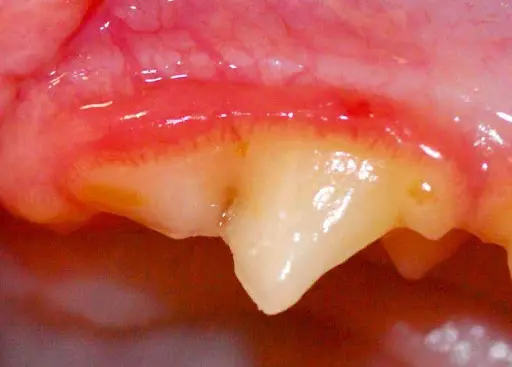
Gingivitis
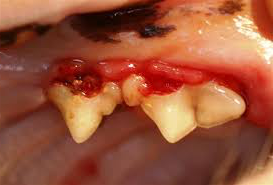
Tooth Resorption
Tooth resorption occurs when the tooth structure begins to break down, exposing the sensitive inner nerve tissue of the tooth to the oral cavity. A universal underlying cause for tooth resorption has not been identified in cats, and familial history may play a role. An annual dental cleaning along with an oral home care routine is invaluable in detecting and treating this painful oral condition early.
Feline chronic gingivostomatitis, also referred to as ‘stomatitis’, has long been thought to be an aberrant immune response, leading to several oral inflammation, most significantly affecting the back portion of the mouth. Treatment involves full mouth extraction therapy in combination with medical management to provide a comfortable oral cavity.
Trauma may affect the teeth in a variety of ways. Cats frequently have small fractures of the tips of the canine teeth (fangs). Even though these fractures are very small, they may allow bacteria inside the teeth and extraction may be required. If caught early, treatment options include odontoplasty, bonded sealant therapy or root canal therapy, depending on whether the fracture extends to the pulp cavity.
How Does a Cat With No Teeth Eat?
The good news is that although dental problems may require the removal of teeth, your cat will feel and eat better! Once painful, diseased teeth are removed, the associated inflammation and resulting pain are resolved; this leads to improved eating behavior.
Cats can eat and manage very well without teeth. Cat teeth are used more for the purpose of grasping and shearing food rather than chewing and grinding food like a human. Many cats already swallow their food with almost no chewing. Your cat’s tongue will help it to propel food to the back of the oral cavity.
Feeding a Cat with No Teeth
Surprisingly, many cats will continue to eat their usual dry food or without any teeth. Other recommended food choices for cats with no teeth include softened kibble (this can be accomplished by adding warm water or chicken broth to dry kibble and letting it soak for a few minutes). Canned food is another good option.
An important thing to note with canned food is that it is has less calories per volume due to the increased water content compared to dry food. Adding crumbled kibble with canned food will boost the caloric content if needed.
It is a good idea to offer your cat a few varieties of food and treats to find what they like best. It is important to remember when feeding treats, to make sure they are smaller in size and easy to swallow as your cat will not be chewing them.
Aside from a possible change in diet and slower eating speeds, your cat will live an otherwise normal life without teeth. In fact, your cat will likely thrive with improved oral health, free of pain and dental infection. If you believe your feline companion is struggling with dental pain, please call us to schedule an appointment at Montana Pet Dentistry and Oral Surgery.
A Cat With No Teeth Can Still Live a Happy Life!
Aside from a possible change in diet and slower eating speeds, your cat will live an otherwise normal life without teeth. In fact, your cat will likely thrive with improved oral health, free of pain and dental infection. If your feline is struggling with dental pain or you’d like to learn more about caring for a cat with no teeth, contact us to set up an appointment in our Bozeman office with Dr. Melissa Guillory.
Images used under creative commons license – commercial use (12.04.2021) Pexels